If you are priced out of closer-in Bay Area markets, Tracy and Mountain House probably keep showing up on your list. Both give you a more attainable path to homeownership than many west-side commute markets, but they solve the Bay Area commuter puzzle in different ways. This guide breaks down price, commute setup, housing options, and daily convenience so you can compare them with more confidence. Let’s dive in.
Price Differences Matter
For many Bay Area commuters, the first big question is simple: where will your budget stretch further?
Based on city and market data, Tracy generally offers more price flexibility. Tracy’s March 2026 finance packet reports a median detached single-family home price of $685,000, while Mountain House’s 2025 audited statements list a median home sales price of $1.01 million. Market snapshots also show Tracy with a lower typical price point than Mountain House, even though individual listings can vary.
Tracy city data also shows a much larger housing base, with 31,196 completed housing units. In Mountain House, city audited statements list 8,108 housing units. That difference helps explain why Tracy often gives buyers more variety across price points and home types.
Mountain House Feels Newer
If newer construction is high on your list, Mountain House usually stands out first.
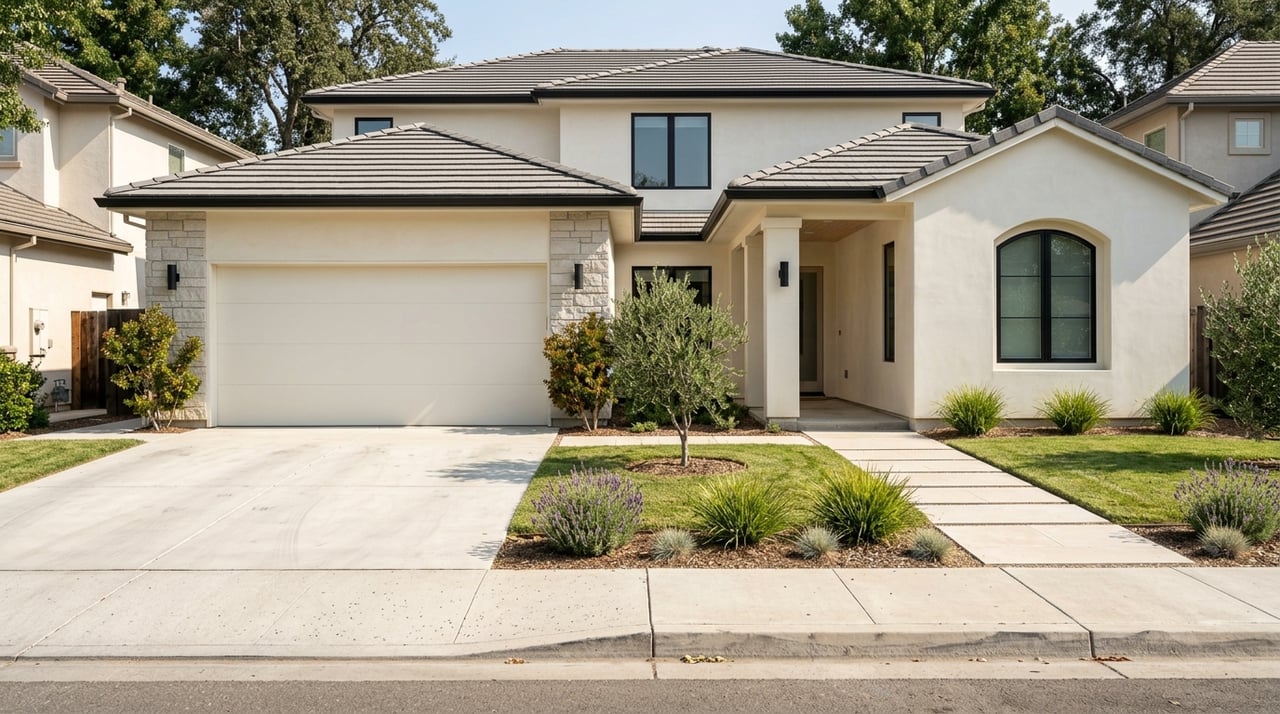
According to Mountain House planning materials, the community was designed as a master-planned area organized around villages, parks, and smaller commercial areas. That layout tends to create a more uniform feel from neighborhood to neighborhood. For buyers who want a newer-home environment, that can be very appealing.
Tracy, by comparison, has a broader mix of housing. City planning and finance materials describe Tracy as predominantly single-family, with additional multifamily and mixed-density development being added near commercial areas. In practical terms, that means you may find more choices in Tracy, but the housing stock will feel less uniform.
Commute Access Is Different
For Bay Area commuters heading toward Oakland, Hayward, or Berkeley, both communities rely on westbound freeway travel patterns.
The City of Tracy notes that Tracy sits near I-580, I-205, and I-5, and that many residents commute west to places like Oakland, Fremont, San Francisco, and San Jose. Those same planning materials also note congestion along I-580 and I-205 during commute hours. Mountain House sits just northwest of Tracy near I-205, with access via Grant Line Road, Mountain House Parkway, and Byron Road.
So while the two communities are close to each other, they do not offer the same commuter experience once you get beyond your front door. That difference matters if you want a backup plan when driving conditions get rough.
Tracy Offers More Transit Flexibility
If you want more than one way to get to work, Tracy has the stronger setup.
City documents describe Tracy Transit Station as a bus hub with about 220 to 228 free parking spaces. The city also identifies a park-and-ride lot at 4800 S Tracy Blvd, and older transit materials list additional park-and-ride facilities. TRACER fixed routes and commuter routes connect riders to local shopping and regional transit.
That does not mean every commute from Tracy is easy. It does mean Tracy gives you more built-in flexibility if you want to combine driving, parking, bus connections, or regional transit options. For some buyers, that backup structure is a major advantage.
Mountain House Works Best With ACE
Mountain House can still work well for commuters, but the setup is more specific.
According to Mountain House transportation information, the posted commuter option is an RTD direct shuttle between Mountain House and the Tracy ACE station during morning and evening hours. ACE provides weekday rail service between Stockton and San Jose, with Tracy and Vasco listed as the closest stations.
That makes Mountain House a solid fit if you are comfortable building your routine around shuttle-to-rail travel. If you prefer multiple park-and-ride choices and a more developed local transit network, Tracy is generally the stronger match.
Tracy Has More Everyday Convenience
Your commute is important, but your weekday errands matter too.
The City of Tracy describes the city as a hub for small businesses, national retailers, and restaurants. Its March 2026 finance packet also notes that Trader Joe’s reopened a long-vacant building and Sprouts broke ground at Ellis Village Center. TRACER also serves major shopping destinations including West Valley Mall, WinCo, Northgate Village, and Walmart Supercenter.
In short, Tracy functions more like a full-service errand town. If you want more nearby options for shopping, dining, and routine stops, Tracy has the deeper bench.
Mountain House Feels More Park-Centered
Mountain House offers a different kind of daily experience.
Planning materials for Mountain House describe a neighborhood-oriented community with village parks and a larger Central Park. The city says each neighborhood includes a five-acre Village Park, while Central Park includes ball fields, basketball, bocce, tennis, and play areas.
That can be a strong draw if you want a quieter, more planned residential environment. At the same time, the same planning materials note that retail expectations have shifted from the original master plan, and Mountain House residents rely on the Tracy Post Office for full postal services. So the tradeoff is clear: you gain a newer, park-heavy setting, but you may still head into Tracy for some services and errands.
Which Community Fits Your Priorities?
If you are choosing between Tracy and Mountain House, the best answer depends on what you need most from your next move.
Here is the simplest way to think about it:
- Choose Tracy if you want more housing choice, more price flexibility, and stronger park-and-ride or transit backup.
- Choose Mountain House if you want a newer, more uniform master-planned setting and you are comfortable with a shuttle-to-ACE commute routine.
- Choose based on lifestyle if your daily pattern matters as much as your home itself. Tracy is fuller on services and errands, while Mountain House leans more residential and park-centered.
For many Bay Area buyers, especially first-time buyers and households balancing budget with commute realities, this comparison comes down to flexibility versus newer product. Neither choice is one-size-fits-all. The right move is the one that fits your budget, your work routine, and the kind of daily life you want.
If you are weighing Tracy, Mountain House, or other commute-friendly options in the East Bay and Tri-Valley orbit, Ranon Lanners can help you compare the tradeoffs clearly and build a plan that fits your goals.
FAQs
Is Tracy or Mountain House more affordable for Bay Area commuters?
- Tracy generally offers more price flexibility based on city and market data, while Mountain House tends to trade at a premium for newer and more uniform housing.
Is Mountain House better than Tracy for newer construction?
- Yes, Mountain House is more closely associated with newer home product and a master-planned village layout, while Tracy has a broader mix of older and newer housing.
Is Tracy better for transit and park-and-ride options?
- Yes, Tracy has the stronger park-and-ride and transit setup, including Tracy Transit Station, free parking, and additional park-and-ride facilities.
Is Mountain House a good choice for ACE commuters?
- Yes, Mountain House can work well if you are comfortable using the RTD direct shuttle to the Tracy ACE station during weekday commute periods.
Does Tracy have more shopping and services than Mountain House?
- Yes, Tracy has a deeper base of retailers, restaurants, and everyday services, while Mountain House is more neighborhood-oriented and still depends on Tracy for some needs.
